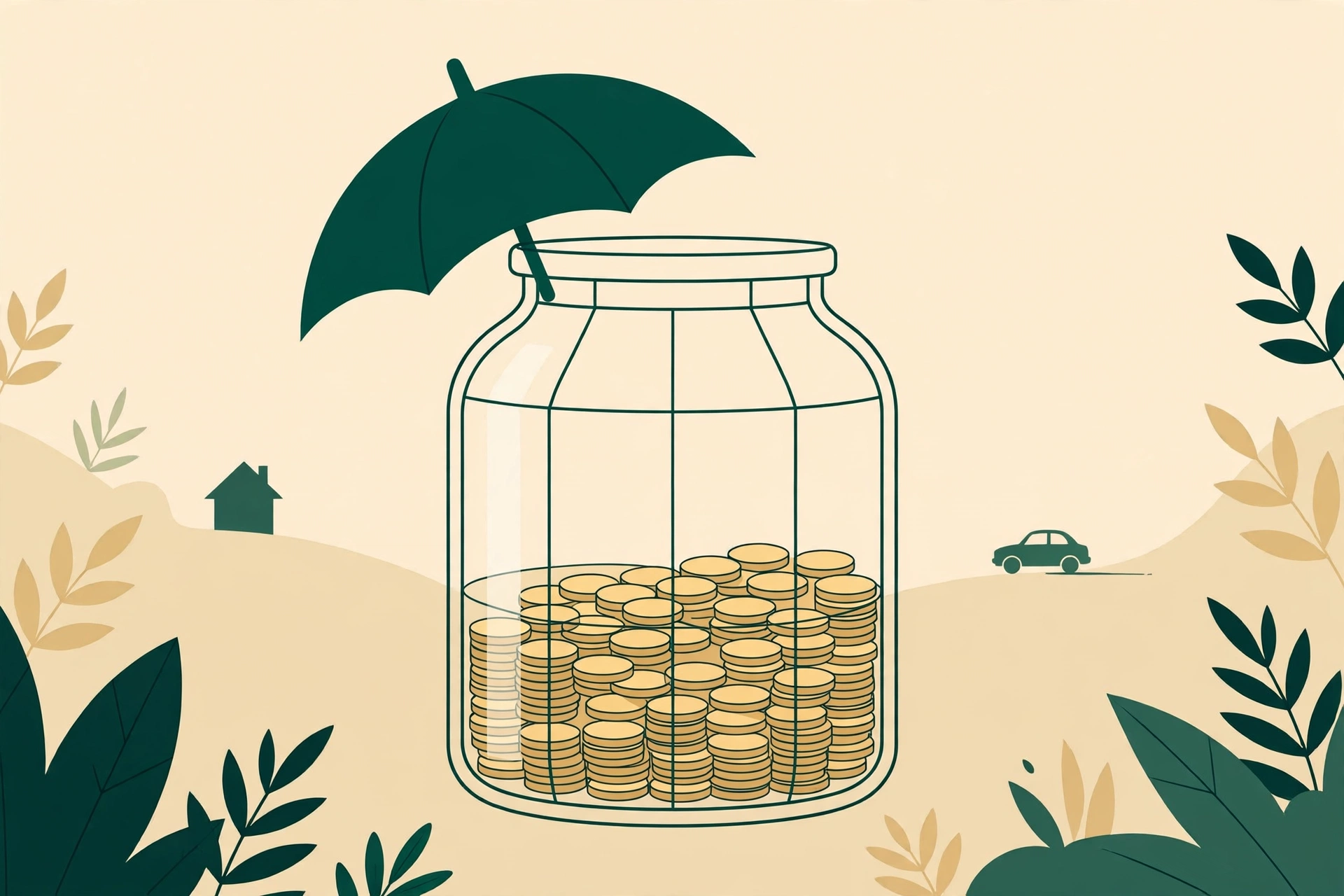
What is an emergency fund?
An emergency fund is a pot of money, kept separate from your everyday spending, that exists for one job: covering genuine surprises without borrowing. A car repair, a broken boiler, a medical bill, or a few weeks without income — the fund absorbs the shock so your budget, and your sleep, survive it.
It is not an investment, and it's not savings for a holiday or a new phone. Those are great goals, but they deserve their own pots. The emergency fund is boring on purpose.
Step 1: Start with a small starter goal
“Save six months of expenses” sounds impossible when you're starting from zero, so don't start there. Set a first goal of $500 to $1,000 — enough to cover the most common surprises, like a car repair or a replacement appliance. Reaching it is quick, it feels achievable, and it already changes your life: the next surprise goes on the savings account, not the credit card.
Once the starter fund is in place, most people then aim higher — especially if they also have high-interest debt to clear. A common order of operations is: starter emergency fund first, then attack expensive debt, then grow the fund to its full size.
Step 2: Decide how much you ultimately need
The widely used guideline is 3 to 6 months of essential expenses — not your full salary, just the essentials: housing, utilities, groceries, minimum payments, insurance, and basic transport. Add up one month of those from your budget, then multiply.
- Lean toward 3 months if you have a stable job, a working partner, or another safety net.
- Lean toward 6 months if you're self-employed, the sole earner, work in an unpredictable industry, or have health concerns that could interrupt work.
Work out your emergency fund target
Enter one month of essential expenses — housing, bills, groceries, minimum payments, transport — and how many months of cover you're aiming for.
Your target emergency fund:
Step 3: Keep it in the right place
An emergency fund has two requirements that pull in opposite directions: it must be there when you need it, and slightly annoying to reach for everyday spending. In practice that usually means:
- A separate savings account, ideally at a different bank or at least in a clearly separate pot from your spending money, so you don't “borrow” from it casually.
- Easy to access in a real emergency — available within a day or two, not locked away or invested where its value could be down exactly when you need it.
- Not invested in the stock market. The fund's job is certainty, not growth. Money you might need next month shouldn't ride market ups and downs.
Some savings accounts pay interest, which is a nice bonus — but the account's safety and separateness matter far more than squeezing out extra interest. We don't recommend specific banks or accounts; compare a few regulated options and choose one with no fees for holding your money.
Step 4: Start small, and make it automatic
The best answer to “how to save money when there's nothing left” is: save an amount so small it doesn't need anything left. Some ways real people start:
- Automate a tiny transfer. $10 or $25 the day after each payday, moving automatically. You stop noticing it within a month — but the fund notices.
- Save windfalls on purpose. Tax refunds, overtime pay, birthday money, selling something you don't use — send a set share (say, half) straight to the fund before it evaporates.
- Redirect one habit. Pick one recurring spend — a subscription you barely use, one takeaway a week — and send that exact amount to the fund instead. Same lifestyle, one swap.
- Round up mentally. Each time you're paid, skim the balance down to a round number and move the difference. $1,847 becomes $1,800 in checking and $47 in the fund.
Then raise the amount a little whenever your income rises or a bill disappears. A finished debt payment is the perfect example: keep paying the same total each month, but send the freed-up money to the emergency fund instead. Your lifestyle doesn't change — your safety does.
Used the fund? That's what it's for
Dipping into your emergency fund for a genuine emergency is not a failure — it's the system working exactly as designed. Afterwards, rebuilding it simply becomes your top savings priority again until it's back to target.
What counts as an emergency (and what doesn't)
- Yes: job loss or reduced hours, essential car repairs, urgent home repairs (heating, plumbing, a leaking roof), medical or dental bills, an essential appliance dying.
- No: holidays, sales, gifts, a new phone because yours feels slow. Those are worth saving for — in separate, named savings pots, so the emergency fund stays intact.
- Plan for it instead: predictable irregular costs like annual insurance, car servicing, and holiday spending aren't emergencies at all. They belong in your monthly budget as small monthly set-asides (see the budgeting guide).
Got the starter fund? Now tackle the debt
With $1,000 banked, extra money works harder against credit card interest. Here's the payoff plan.
Frequently asked questions
How much should my emergency fund be?
Start with a starter goal of $500–$1,000, then build toward 3 to 6 months of essential expenses (housing, bills, groceries, minimum payments, transport). Single earners, freelancers, and anyone with variable income usually aim closer to 6 months; dual-income households with stable jobs often choose 3.
Where should I keep my emergency fund?
In a separate savings account you can reach within a day or two in a real emergency, but that's separate enough from daily spending that you won't dip into it casually. Avoid investing it — the fund needs to be worth the same on the bad day as on the good day.
Should I build an emergency fund or pay off debt first?
A common approach is stages: build the small starter fund first so surprises don't add new debt, then focus on high-interest debt, then return and grow the fund to 3–6 months. Paying interest-heavy debt while having zero cushion tends to restart the debt cycle at the first surprise.
How can I save money when my budget is already tight?
Start smaller than feels meaningful — even $10 per payday — and automate it for the day after you're paid. Small automatic amounts beat larger amounts that depend on willpower. Then grow the amount using windfalls and freed-up payments whenever something in your budget ends.
This guide is educational information, not financial advice. See our Disclaimer.